Can You Buy Hosting Without Buying a Domain?
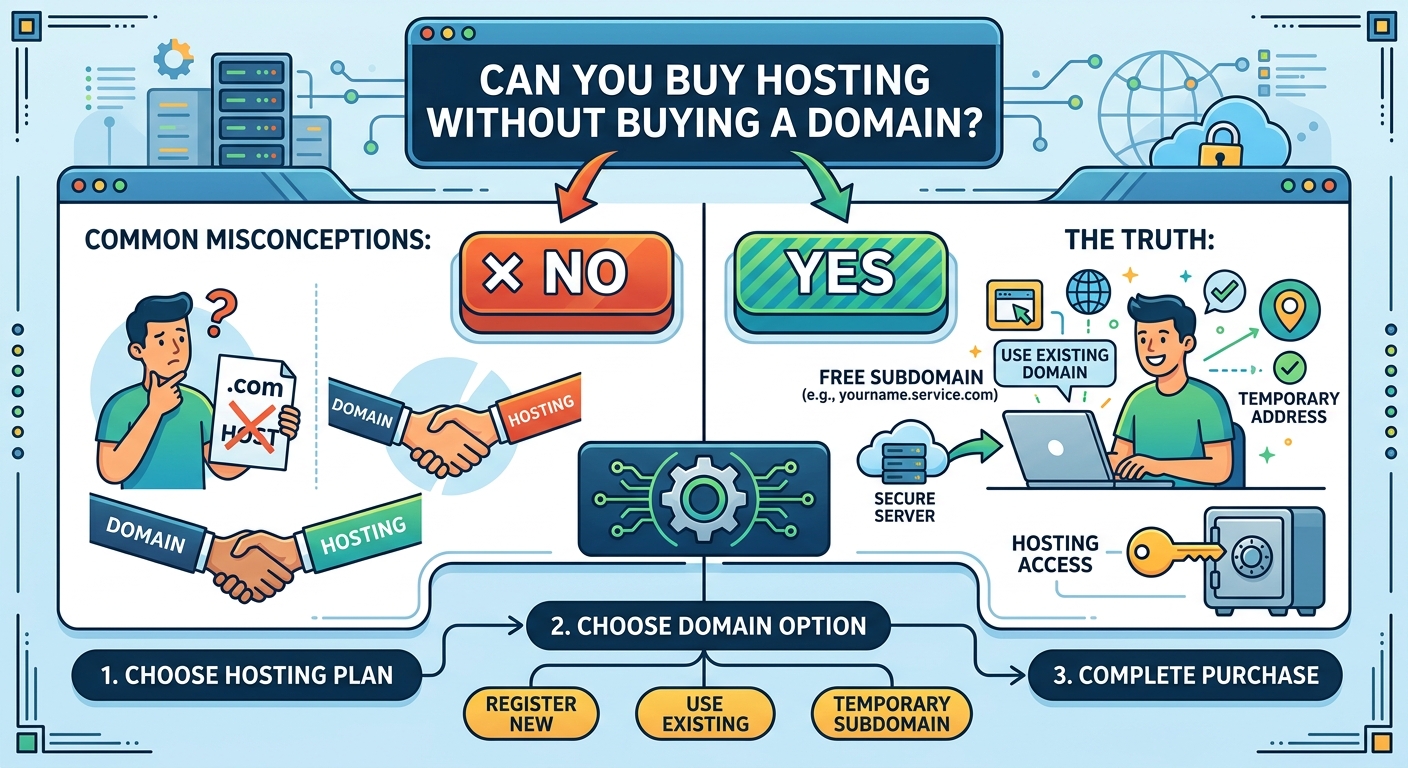
Yes, you can buy web hosting without buying a domain name. Hosting and domain registration are separate services, even though they are commonly purchased together when launching a website.
This flexibility can be useful for business owners, SMEs, churches, law firms and other organisations that want to prepare a website before choosing a permanent web address. You may also already own a domain registered with another provider and only need hosting for your website.
Understanding the difference between these services will help you avoid unnecessary costs and make setup easier.
What is web hosting?
Web hosting is the service that stores your website’s files and makes them available online. These files may include your website pages, images, databases, videos and application code.
When someone visits your website, the hosting server delivers the relevant files to their browser. Hosting can come in different forms, including shared hosting, VPS hosting and cloud hosting. The right option depends on the size of your website, expected traffic, technical requirements and available budget.
Without hosting, your website files do not have a reliable place to operate online. You may have designed a website, but visitors will not be able to access it through the internet until it is placed on a suitable server.
What is a domain name?
A domain name is the address people type into a browser to find your website. It is the readable alternative to using a numerical IP address.
For example, a business might use a domain based on its name, while a church, law firm or professional organisation may choose an address that reflects its identity. A domain can help people remember your website and can support a more professional online presence.
Registering a domain gives you the right to use that web address for the registration period, subject to the terms of the domain extension and registrar. It does not automatically provide storage for your website files. That is the role of hosting.
Can hosting work without a domain?
Yes. Many hosting providers allow you to purchase a hosting plan without registering a new domain. You may be given a temporary address, a server address or another access method for viewing and managing your website.
This allows you to:
- Upload website files before selecting a permanent domain.
- Build and test a website privately or on a temporary address.
- Use a domain registered with a different provider.
- Move an existing website to new hosting without transferring the domain.
- Set up a website project while your preferred domain choice is still being decided.
The exact temporary access method depends on the hosting provider. It may not be suitable as a permanent public address, but it can be useful during development and migration.
When might you buy hosting first?
1. You are still choosing a domain name
A suitable domain name may require careful thought. You may want to confirm your business name, review available domain extensions or agree on a name with business partners before registering it.
Buying hosting first can allow your website work to begin while that decision is being finalised. However, if you have already found a valuable and suitable domain name, registering it promptly may reduce the risk of someone else taking it.
2. You already own a domain
Many website owners purchase their domain and hosting from different companies. For example, you may have registered your domain previously but now need more suitable hosting for a new website.
You do not need to purchase the domain again. Instead, you can connect the existing domain to your new hosting account by updating its DNS settings or nameservers.
3. You are moving an existing website
When transferring a website to a new hosting provider, the domain can remain with its current registrar. The important task is to point the domain to the new server after the website files and databases have been moved.
Keeping the domain and hosting separate can also make future changes easier because you are not required to transfer both services whenever you change hosting.
4. You are developing a website before launch
A designer or developer may need hosting to build and test a website before the organisation is ready to publish it. A temporary address can support this stage, although access controls should be considered if the website contains confidential information or unfinished content.
How do you connect a domain to hosting?
After purchasing hosting, you generally connect your domain by changing its DNS configuration. The hosting provider will normally supply the nameservers or DNS records required for the connection.
The usual process is:
- Purchase or choose a hosting plan.
- Obtain the hosting account details and required nameservers or DNS records.
- Log in to the account where your domain is registered.
- Replace or update the relevant DNS settings.
- Upload your website files or install your chosen website platform.
- Test the domain and confirm that the website loads correctly.
DNS changes may not appear everywhere immediately. The time can vary depending on the records involved, caching and the providers handling the domain and hosting. During this period, some visitors may see the old destination while others see the new one.
What happens to email if you change hosting?
Business email often depends on DNS records, so changing hosting should be planned carefully. If your organisation uses email addresses connected to its domain, do not remove or replace mail-related records without knowing how your email service is configured.
A website can be moved to new hosting while email continues to operate through a separate email provider. The key is to update only the records required for the website and preserve the records needed for mail delivery.
Before making DNS changes, record your existing settings and confirm which service handles your email. This is especially important for organisations such as law firms and businesses that rely on consistent communication with clients.
Is it better to buy hosting and a domain together?
For many beginners, purchasing both services from one provider is convenient. One account may make billing, support and initial setup easier. Some providers also offer domain registration during the hosting order process.
However, buying them together is not required. Separate providers may suit you if:
- You already have a domain.
- Your preferred domain registrar does not provide the hosting features you need.
- You want to keep your domain independent from your hosting provider.
- You are moving a website and want to avoid changing several services at once.
When comparing options, look beyond the introductory offer. Consider renewal terms, storage, backups, support, security features, control panel access and the hosting resources your website needs. The lowest initial cost is not always the lowest overall cost or the best fit for a business website.
What can you do before buying a domain?
While using temporary hosting access, you can prepare much of your website. You may create page content, upload images, configure a content management system, test forms and organise your navigation.
It is still wise to delay public promotion until you have a permanent domain and have tested the complete website. A temporary address may be difficult to remember and may not represent your brand professionally.
You should also confirm that your final domain can be connected easily to the hosting account. Check whether the host supports the technology your website requires, such as databases, programming languages, content management systems or specific server configurations.
Do you need a domain for every website?
A domain is not required for every type of online project. A website can be tested on a temporary address, hosted within an internal network or accessed through a platform-provided address.
For a public-facing organisation, however, a custom domain is usually the more practical choice. It gives visitors a clear address, supports brand recognition and can make it easier to create professional domain-based email addresses. The domain should be chosen carefully because changing it later can affect links, search visibility, printed materials and customer awareness.
Final considerations before you buy hosting
Before ordering, identify what you need now and what you may need later. A small informational website may have different requirements from a busy online shop, a client portal or a website with custom applications.
- Decide whether you need a domain immediately or already own one.
- Confirm how you will access the hosting account without a domain.
- Check how the provider connects external domains.
- Review backup, security and support options.
- Protect existing email and DNS settings during any change.
- Choose hosting that can support your website’s expected requirements.
Sonhosting can help simplify the process of choosing hosting and setting up the tools needed for a website. Whether you are preparing a new website or moving an existing domain, understanding how hosting and domains work separately makes it easier to plan with confidence.
In short, you can buy hosting without buying a domain. You can use temporary access while building your website, connect a domain registered elsewhere or purchase a domain later. The best approach depends on your project timeline, technical needs and how quickly you are ready to establish a permanent online identity.