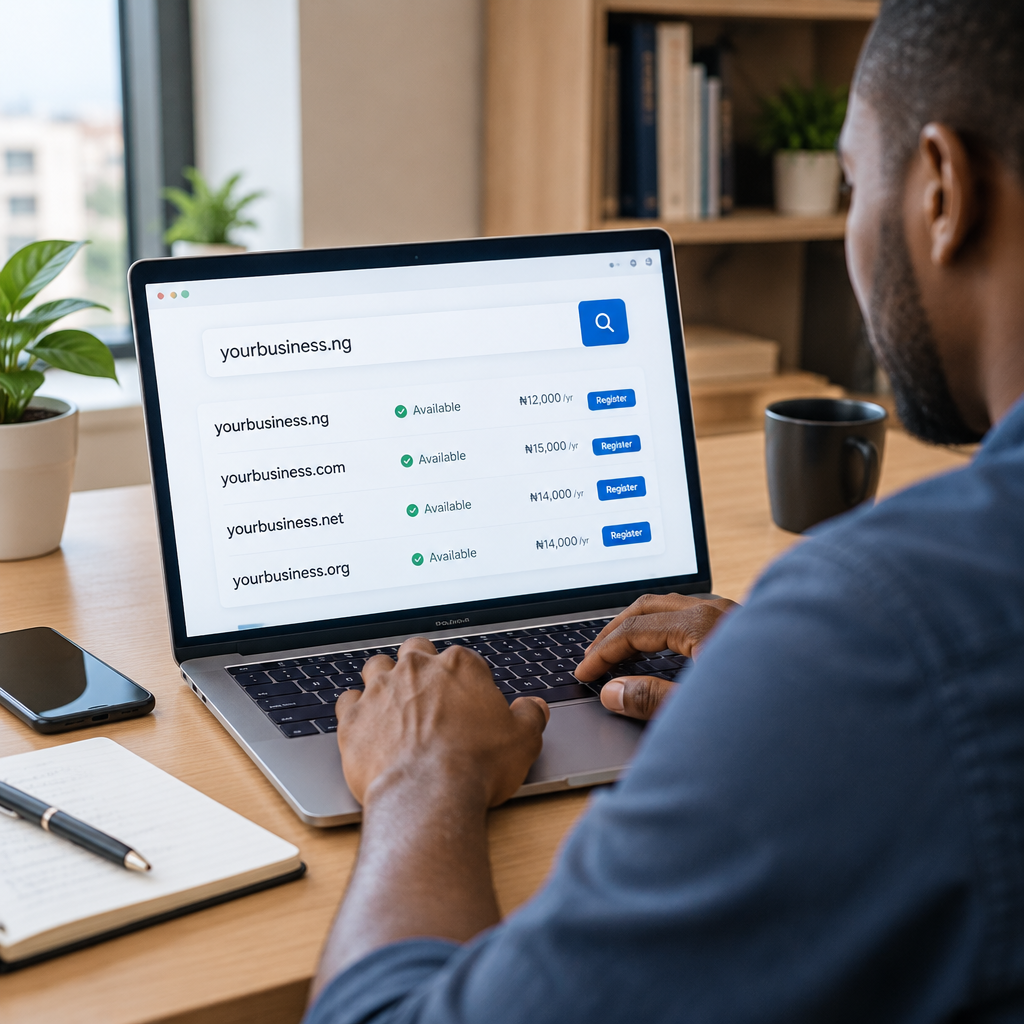
How to Buy a Domain Name for Your Business
Choosing a domain name is one of the first important decisions when building a business website. Your domain is the address customers use to find you online, and it can also support professional email, marketing and long-term brand recognition.
For a Nigerian business, entrepreneur or organisation, the right domain should be easy to remember, connected to your name or service, and registered under information you control. Buying the cheapest available name is not always the best decision. You also need to consider the domain extension, ownership details, renewal process and how the name will work as your business grows.
What is a domain name?
A domain name is the readable address people enter to visit a website, such as yourbusiness.com. Computers use numerical IP addresses to locate websites, but domain names make those addresses easier for people to remember and share.
A domain is not the same as web hosting. The domain is your website’s address, while hosting is the server space where your website files, images and databases are stored. You normally need both for a functioning website. You may also connect the domain to domain-based business email, such as [email protected].
Start with your business identity
Before searching for available names, decide what the domain needs to achieve. A local service provider may want a name that is easy for nearby customers to recognise. A startup may prefer a name that can support expansion beyond one city or product. A creator or professional may use their personal name to build a long-term reputation.
Write down a few possible names and check that they are:
- Easy to say, spell and remember
- Relevant to your business or brand
- Short enough to type comfortably on a mobile phone
- Suitable for use in email addresses
- Flexible enough if your products or services change
Avoid names that depend heavily on punctuation, unusual spelling or long strings of words. A customer who hears your name in a conversation should have a reasonable chance of typing it correctly.
Choose the right domain extension
The extension is the part after the final dot, such as .com, .org or a Nigerian country-code extension. Your choice should support how customers see the business and where you expect to operate.
Common options to consider
- .com: A widely recognised choice for commercial businesses and organisations serving a broad market.
- .org: Often associated with organisations, communities and non-commercial initiatives, although the name should still match your actual purpose.
- Nigerian extensions: A country-specific option can help communicate a connection to Nigeria and may suit businesses focused on the local market.
There is no universal rule that one extension is best for every business. Consider what your audience expects, whether the name is easy to communicate and whether the extension fits your future plans. If a strong brand name is available in more than one relevant extension, some businesses register multiple versions and direct them to the main website. This is optional and should be weighed against the additional renewal costs.
Check availability and possible conflicts
Use a domain search tool from a reputable registrar to see whether your preferred name is available. If it is already registered, do not assume that adding random numbers or extra words is the only solution. Try a shorter variation, a clear service-related phrase or a different suitable extension.
Before registering, check whether the name could be confused with another business, product or organisation. Search engines and social platforms can help you identify similar names, but they are not a substitute for appropriate legal or trademark advice. Avoid registering a name that appears designed to imitate another company or brand.
It is also useful to check how the name looks in lowercase and how it sounds when spoken aloud. Some combinations of words can be misunderstood when written without spaces. This matters when customers type the address from a radio advertisement, conversation or business card.
Register the domain in your own control
When you buy a domain, pay close attention to the registrant or account information. A business should not lose access to its domain because it was registered using a developer’s personal email address, a former employee’s account or an unknown third party’s details.
Use a business-controlled email address where practical, and keep the account login, recovery details and registration records secure. If a web developer or hosting provider helps with registration, confirm that your business is clearly listed as the owner and that you can access the relevant account.
Keep copies of important information, including:
- The domain name and extension
- The registrar account email address
- Renewal dates and payment details
- Account recovery information
- Nameservers and DNS records, where relevant
Do not share passwords through informal channels. Use a strong, unique password and enable multi-factor authentication if the registrar provides it.
Understand the total cost
Domain registration is commonly paid for a fixed period, often one year at a time, and it must be renewed to remain active. The first registration price may differ from the renewal price, so check the ongoing cost before making a decision.
Also look for related charges or optional services. These may include privacy-related features where available, transfer fees, additional domain extensions or email services. The goal is not to avoid every additional service, but to understand what you are paying for and which features your business actually needs.
For budget-conscious Nigerian businesses, renewal planning is especially important. A domain that expires can interrupt a website and domain-based email. Put the renewal date on a shared business calendar and keep payment information current. Automatic renewal can help, but it should not replace checking that the payment method and account access still work.
Connect the domain to your website and email
After registration, the domain must be connected to your hosting account through DNS settings. This tells the internet where to find your website and how to deliver email. DNS changes can take time to become visible across different networks, so a newly registered domain may not work immediately everywhere.
If you plan to use business email, make sure the email records are configured correctly. Website hosting and email hosting may be provided together or as separate services, but both need reliable account management. Test sending and receiving messages before printing the address on signs, invoices or marketing materials.
Enable HTTPS for the website through an SSL certificate. Visitors should be able to see that the connection is encrypted, particularly when they submit contact details, log in or make a payment. HTTPS is one part of website security; strong passwords, updates, backups and secure hosting practices are also important.
A practical buying workflow
- Define the brand, audience and geographic focus.
- List several simple domain name options.
- Check spelling, pronunciation and possible confusion.
- Compare suitable extensions and ongoing renewal costs.
- Search availability through a reputable domain provider.
- Register the domain using accurate business or owner information.
- Secure the account with a unique password and recovery method.
- Record the renewal date and set a reminder.
- Connect the domain to hosting, the website and business email.
- Test the website, email address and contact details.
What to do if your preferred domain is unavailable
Do not rush into buying a name that is difficult to spell or unrelated to your brand. Consider a clear variation, a suitable Nigerian extension or a name that describes your service more directly. If the domain appears to be owned by someone else, be cautious about paying an inflated resale price. The cost and risk may not make sense for a small business.
You can also choose a temporary alternative while building your brand, but make sure all public materials use one consistent address. Changing domains later can affect email, printed materials, search visibility and customer recognition, so choose carefully before launching.
Keep ownership secure after registration
Buying the domain is only the beginning. Review the account periodically, keep contact information accurate and check that renewal notices reach someone responsible. Limit account access to people who need it, and maintain backups of your website rather than assuming the domain protects your website content.
A domain, dependable hosting, professional email and a secure website work together to create a stable online home. A hosting provider can handle technical tasks such as DNS configuration, WordPress support and security guidance, while you retain access to the business assets that matter.
The best domain name is not simply one that is available. It is one your customers can remember, your business can control and your team can manage reliably for years to come.